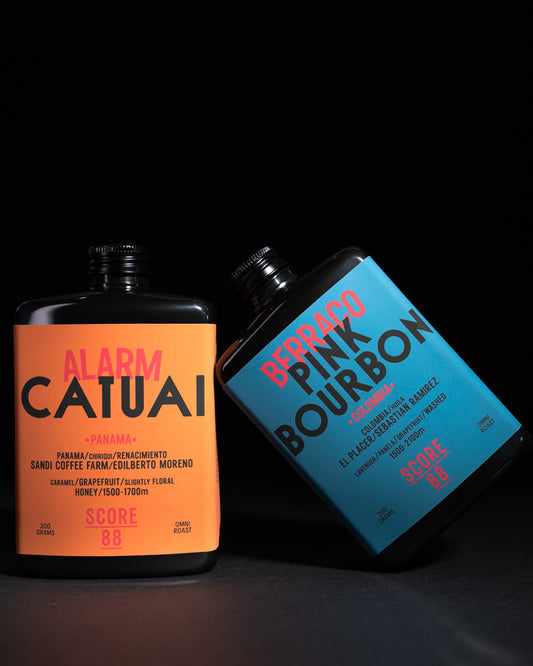
Catuai
Typical Cup Profile
Catuai provides a solid, highly consistent cup profile that specialty roasters depend on for balance and versatility.
In Brazil, where it is predominantly processed using natural or honey methods, Catuai showcases a full, syrupy body alongside warm notes of milk chocolate, toasted nuts, and creamy caramel. In Central America, where washed processing dominates, the cup turns bright, clean, and transparent, highlighting vibrant citrus acidity and stone fruit notes. Under high-altitude conditions and careful post-harvest management, Catuai frequently achieves specialty scores above 85 points and wins Cup of Excellence accolades.
Genetic Origin & History
Catuai originated from a deliberate hybridization program between Mundo Novo and Yellow Caturra, conducted in 1949 by the Instituto Agronômico de Campinas (IAC) in São Paulo, Brazil.
The goal of the IAC breeding team was straightforward: combine the high yield and vigor of Mundo Novo with the compact dwarf architecture of Caturra. This created a resilient plant capable of high-density planting and easy harvesting, including mechanical picking on large estates.
After multiple generations of selection, Catuai was officially released to commercial farmers in 1972. Its name stems from the Tupi-Guarani word "catu", meaning "very good." Today, it is one of the most economically significant Arabica cultivars in the world, representing roughly 60% of Brazil's total coffee production and half of Honduras's output.