Lalo
Lalo
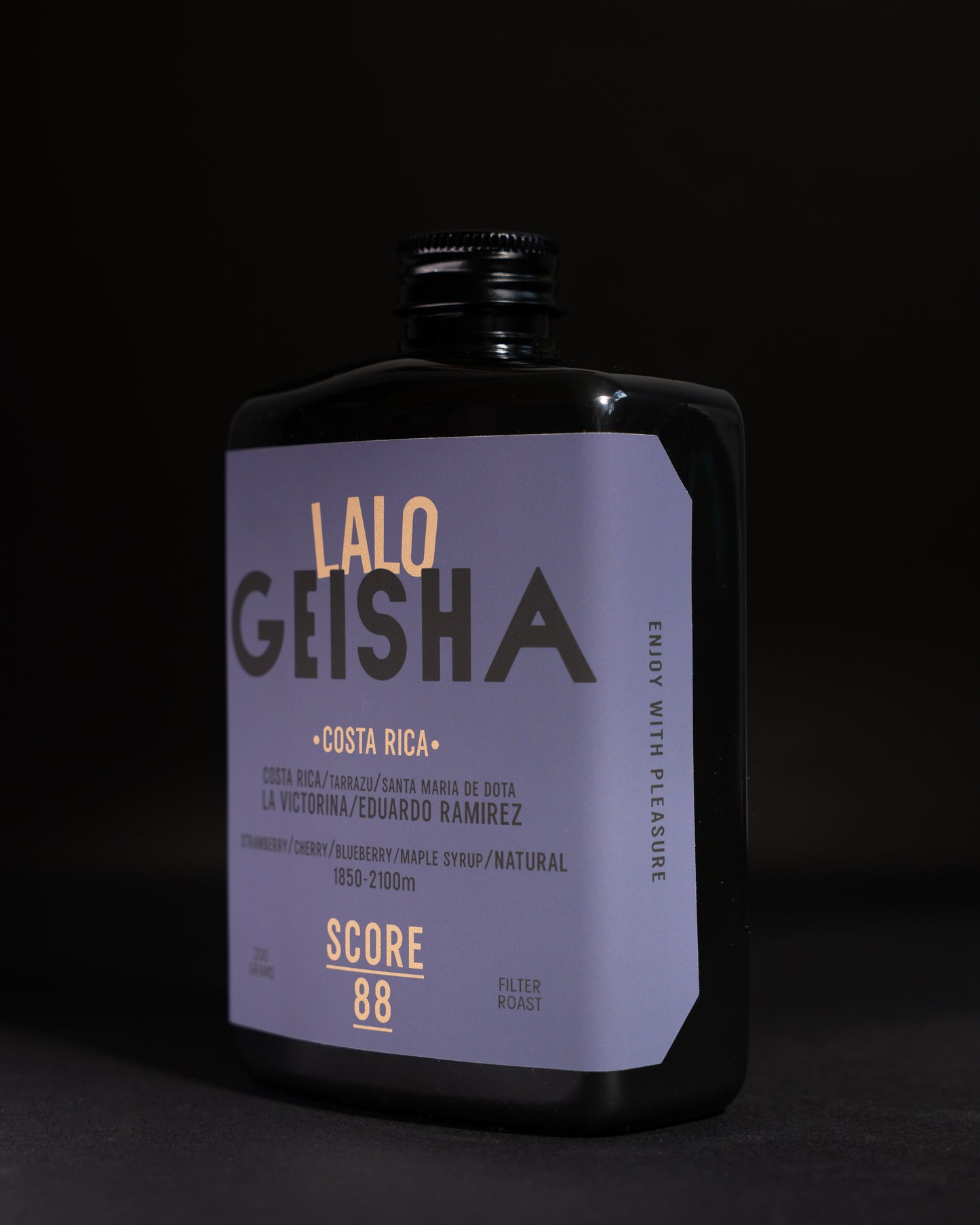
An exquisite, fruit-saturated natural lot brimming with vibrant berries and luxurious maple sweetness.

Costa Rica
Geisha
Natural
Strawberry, Cherry, Blueberry, and Maple Syrup
Filter
88
Couldn't load pickup availability
origin
-
Tarrazu
-
Costa Rica
-
1850-2100m
-
Eduardo Ramirez
La Victorina - Eduardo Ramirez
Eduardo Ramírez represents a brilliant new era of Costa Rican viticulture as a first-generation coffee producer. He built a rigorous technical foundation as a quality manager for major exporters, mastering processing and sensory analysis to become the 2019 National Cupping Champion, a Q-Grader, and an international Cup of Excellence judge.
WANT TO LEARN MORE?
About the process
WHAT IS A Natural PROCESS?
It belongs to the Natural coffee processes.
In the Natural (or dry) process, the coffee beans are dried inside the cherry. After harvesting, only the ripest cherries are selected and immediately placed on raised drying beds or patios under the sun. The fruit remains completely intact during the entire drying stage, allowing the seeds inside to absorb the natural sugars and organic compounds from the surrounding pulp. This traditional and eco-friendly method produces an incredibly sweet, full-bodied cup with intense, jammy fruit flavors and a complex, winey acidity.
IN THIS COFFEE:
ABOUT THE VARIETAL
GENERAL INFORMATION:
- NAME: Geisha
- MOTHER SPECIES: Arabica
- RIPE CHERRY COLOUR: Red
TYPICAL CUP PROFILE:
The Geisha variety is globally celebrated for its extraordinarily sweet, complex, and tea-like cup profile. It is intensely aromatic, featuring dominant floral notes of jasmine, orange blossom, and orchid, beautifully complemented by bright, sparkling citrus flavors such as bergamot, lemongrass, and tangerine. With a delicate, elegant body, a refined malic acidity, and distinct undertones of stone fruits and white peach, it leaves a long, clean, and honey-like sweetness on the finish.
GENETIC ORIGIN & HISTORY:
Geisha is an ancestral wild variety that originates from the southwestern mountains of Ethiopia, specifically near the town of Gesha. In the 1930s, seeds were collected and brought to Kenya and Tanzania, eventually making their way to Latin America (Costa Rica) in the 1950s due to its tolerance to certain coffee diseases. However, its true legendary status was achieved in 2004 in Boquete, Panama, when Hacienda La Esmeralda isolated the variety, noticed its mind-blowing floral profile at high altitudes, and entered it into the "Best of Panama" auction. It shattered all price records, completely revolutionizing the modern specialty coffee industry.