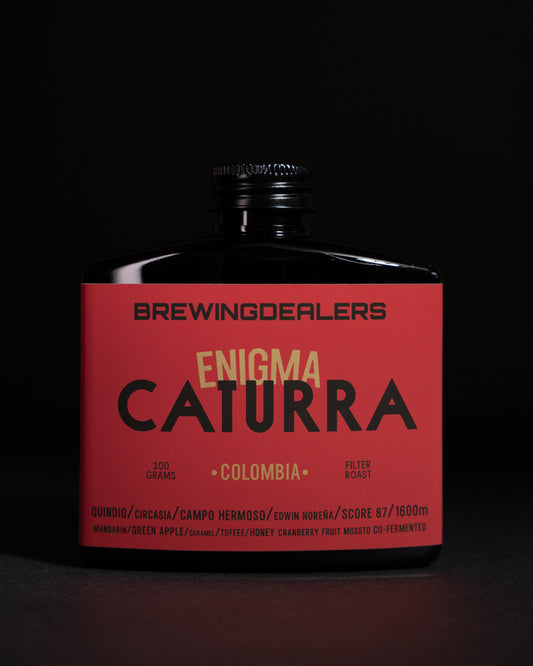
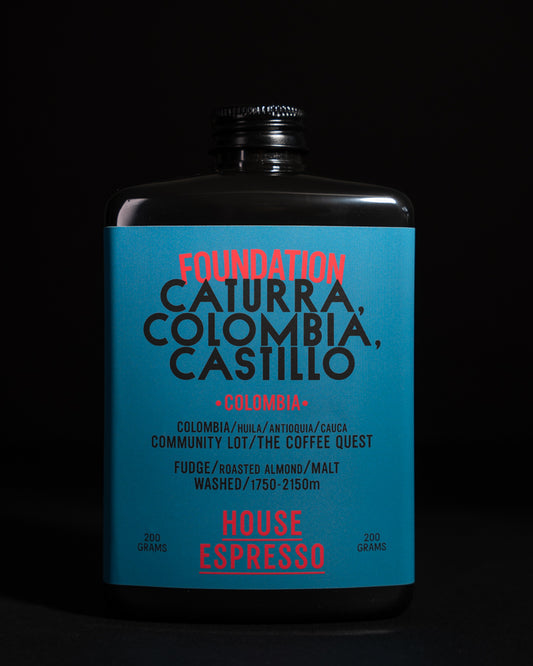
Caturra
TYPICAL CUP PROFILE
Caturra produces a clean, bright, and well-balanced cup, with a pronounced citrus acidity - often described as orange or lime - and a sweetness reminiscent of milk chocolate, caramel, and brown sugar.
Depending on the growing region, elevation, and post-harvest processing method, high-grown washed Caturra lots can also display vibrant notes of red fruit, tropical fruits, or delicate floral nuances. Renowned for its consistency and medium body, Caturra’s lively cup profile makes it one of the most versatile and reliable varieties for specialty roasters worldwide.
GENETIC ORIGIN & HISTORY
Caturra is a natural single-gene mutation of the Bourbon variety, first discovered in the state of Minas Gerais, Brazil, between 1915 and 1918. However, it was not formally studied by agricultural scientists until 1937.
This specific genetic mutation causes dwarfism by shortening the internodal spacing along the branches. The result is a much more compact plant compared to traditional Bourbon trees; in fact, the name "Caturra" originates from the Guaraní word meaning "small." This compact tree architecture revolutionized modern farm management by allowing producers to plant trees at significantly higher densities while making manual harvesting much easier.
Although Caturra was never officially released for widespread commercial planting in Brazil, it rapidly spread throughout Central America beginning in the 1940s, starting in Guatemala before expanding to Costa Rica, Honduras, and Panama. By the 1980s, Caturra had established itself as one of the most economically important coffee varieties across Latin America, and by the early 2000s, it accounted for nearly half of Colombia's total coffee production.